
 AFM针尖
AFM针尖
 校准标准
校准标准 AFM资料
AFM资料 分销商
分销商AFM资料
返回
P3HT‐Based Electroactive Films for In Vitro Neuronal Cell Interfacing
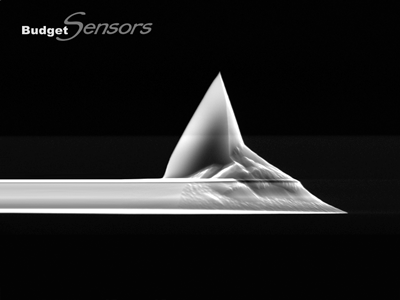
该研究中使用的AFM针尖
摘要
Numerous efforts have been made to address the mechanical mismatch between bioelectronic devices and tissues in the past few years. Interfaces that better mimic the properties of biological tissues can be produced with the support of organic materials, which have a unique combination of soft mechanical properties, biocompatibility, and ionic-electronic conduction, which match the properties of living systems and allow the signal to be transduced at the biotic–abiotic interface. In this context, Poly(3-hexylthiophene) (P3HT), a p-type semiconducting polymer, having good biocompatibility, electrical conductivity, and mechanical properties, is studied. In this work, a polymer blend of P3HT and multi-walled carbon nanotubes (MWCNT) is prepared and deposited on the surface as an electroactive thin film resulting in a tunable nanostructured surface. Further, the biological properties of this new substrate in vitro is evaluated. The conductive polymer-based substrate and the HT-22 cell line can be better connected because of this nanostructured surface effect on the cells' responses to local changes in curvature and topography of the materials. This model is simple yet effectively shows the investigation of neuronal responses to morphological characteristics and electronic interfaces.